How to choose a multivitamin (and the best time to take it)
Danann Remedies Nutrition Team4 min read

A multivitamin cannot replace a good diet, but it can fill the gaps a busy one leaves. What to check on the label, why men's and women's formulas differ, and when to take one so it is absorbed well.
Most of what your body needs from food arrives without your thinking about it. A multivitamin is for the part that does not: the skipped breakfasts, the vegetarian diet that runs short of vitamin B12, the indoor job that sees little sun. Chosen well, it is a modest, sensible habit. Chosen badly, it is wasted money - or more of some nutrients than you need.
Do you need a multivitamin?
Start with your plate. If you eat a varied diet - vegetables and fruit every day, pulses, dairy, whole grains, nuts and seeds - you may need very little. A daily multivitamin earns its place when:
- Your meals are irregular - long shifts, frequent travel or a habit of skipping breakfast.
- You are vegetarian. Vitamin B12 occurs naturally almost only in animal foods, so for vegetarians milk and curd are the main sources.
- You spend most of the day indoors. Your skin makes vitamin D in sunlight, and few foods supply much of it.
- Your needs are higher than average - women, for example, need more iron than men, to replace what is lost every month.
- You are older. The body absorbs vitamin B12 less efficiently with age, and appetite often falls.
A multivitamin is not a substitute for food. It cannot make up for a diet that is short of protein, fibre or energy.
What to check on a multivitamin label
- Every nutrient, with its amount. You should be able to see exactly how much of each vitamin and mineral is in one tablet, and what share of the daily requirement it covers. Be wary of blends and vague totals - more on this in how to read a supplement label.
- Sensible amounts, not megadoses. A daily multivitamin should provide a meaningful share of each nutrient's RDA, with your meals supplying the rest. More is not better: several nutrients have tolerable upper limits.
- The right iron for you. Iron is the clearest difference between men and women - see the table below.
- Vitamin D3. Cholecalciferol (D3) is the form your skin makes in sunlight.
- Vegetarian and FSSAI-licensed, with the manufacturer named on the pack.
- One tablet a day. A routine you can keep matters more than the length of the ingredient list.
Men's vs women's multivitamins
Most nutrients are needed in similar amounts by men and women; a few are not. These are ICMR-NIN's 2020 recommended dietary allowances (RDAs) for adults:
| Nutrient | Adult men | Adult women |
|---|---|---|
| Iron | 19 mg | 29 mg |
| Magnesium | 440 mg | 370 mg |
| Zinc | 17 mg | 13 mg |
| Vitamin A | 1,000 mcg | 840 mcg |
| Calcium | 1,000 mg | 1,000 mg |
| Vitamin D | 600 IU | 600 IU |
| Vitamin B12 | 2.2 mcg | 2.2 mcg |
Iron is the big difference: women need half as much again as men, because they replace iron lost every month. Men need somewhat more magnesium, zinc and vitamin A. Calcium, vitamin D and B12 are the same for both.
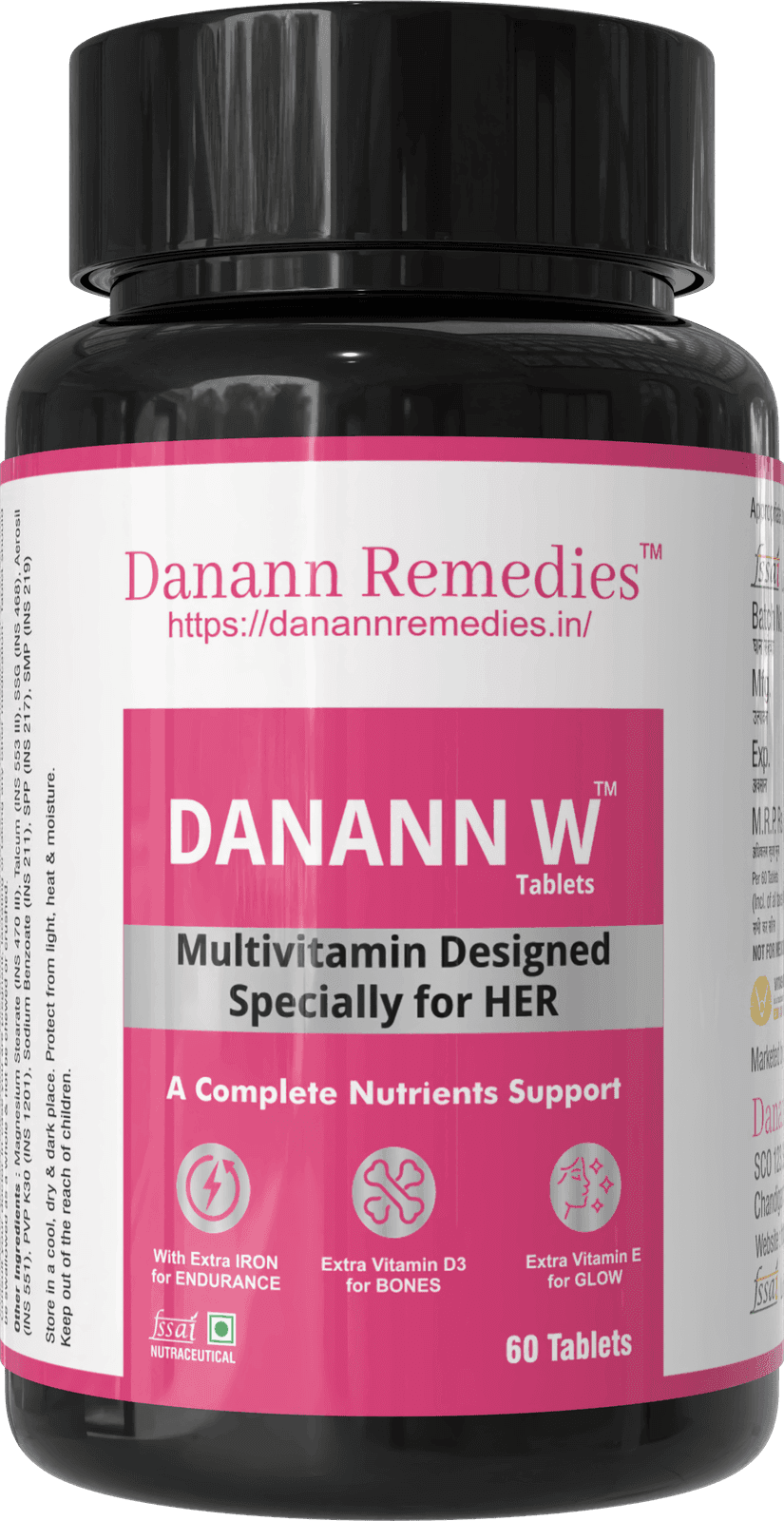
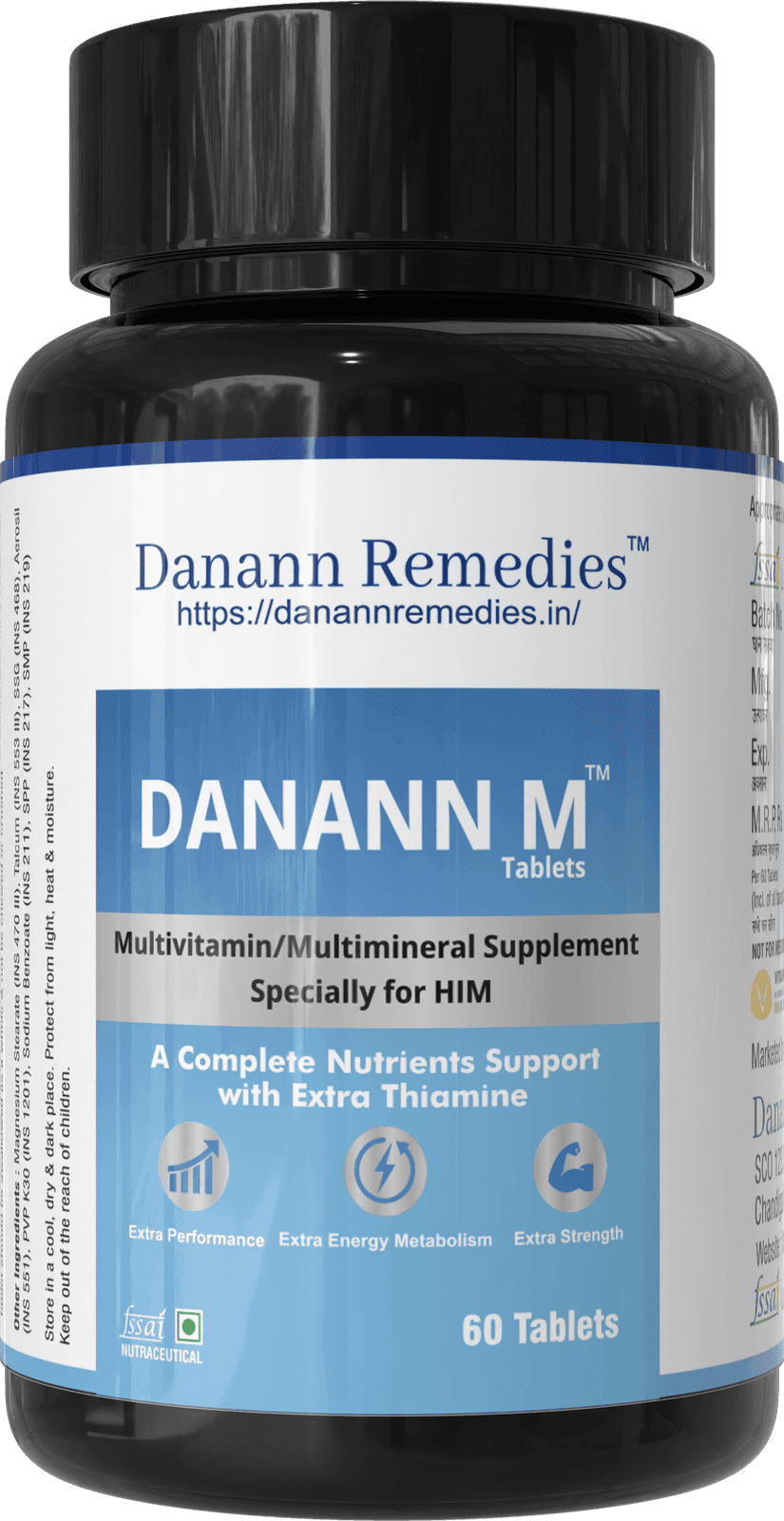
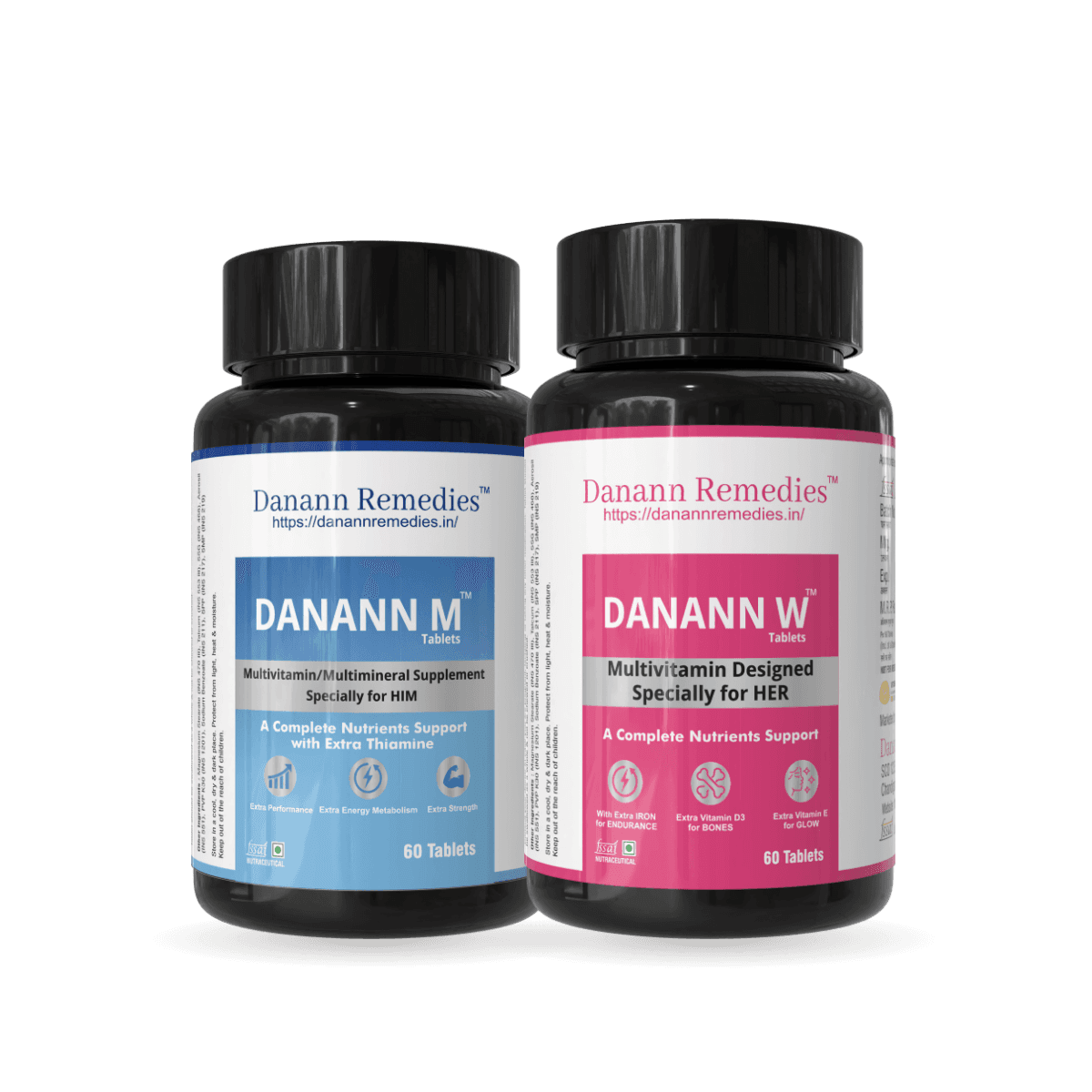
That is why a men's and a women's formula should not be the same tablet with a different label. Danann W carries 27 mg of iron, 140 mcg of iodine, 400 mg of calcium, folic acid and the full B-complex. Danann M keeps iron at 7 mg, because men need less and have no monthly loss to replace, and adds 400 mg of magnesium and 1.8 mg of thiamine. Both carry vitamin D3 and B12, with every quantity printed on the pack - and if you are buying for two, the Danann M & W combo costs less than the pair bought separately.
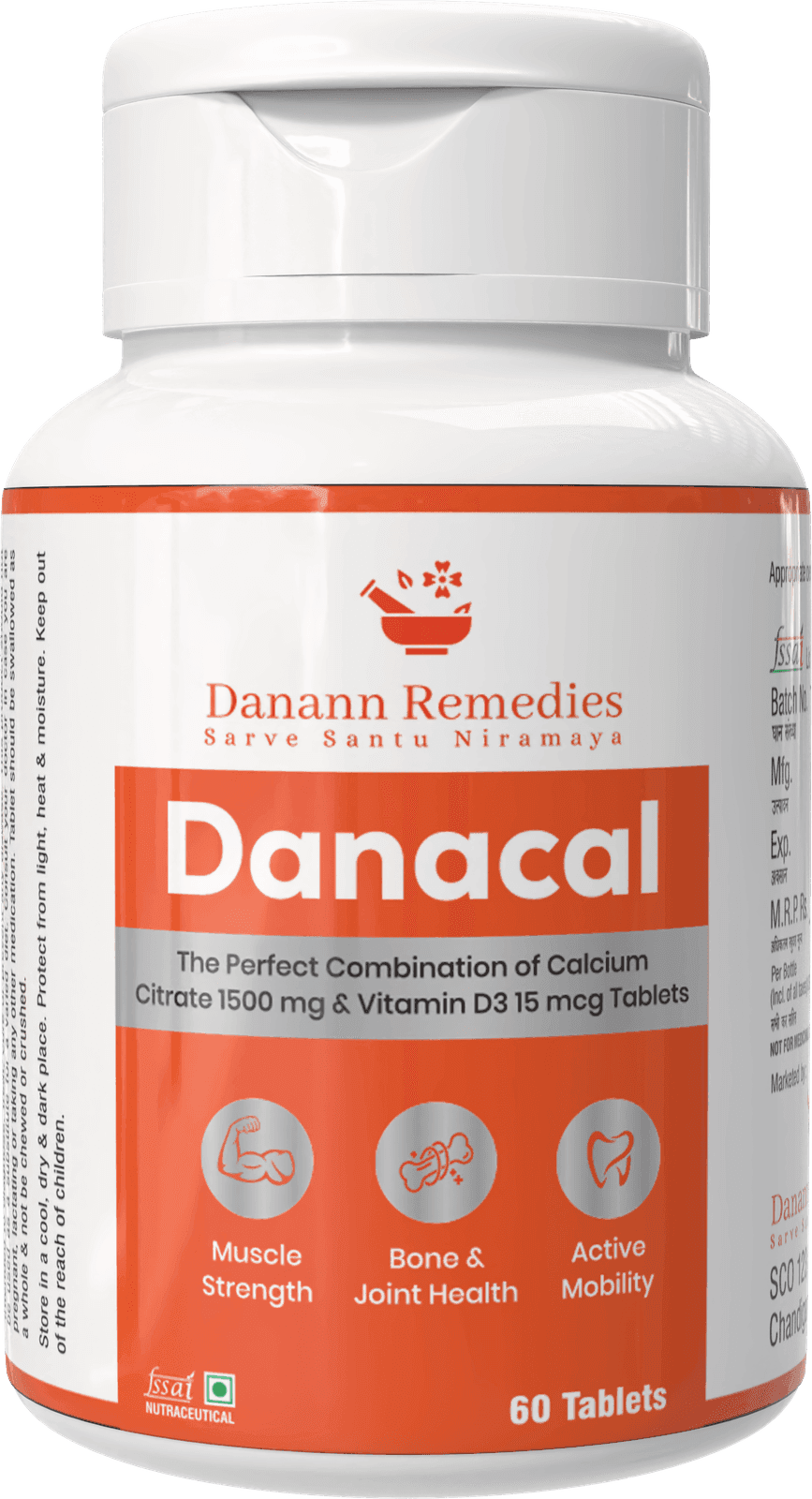
Calcium is the one nutrient a multivitamin cannot carry in full: a day's worth will not fit into one tablet alongside everything else. If your diet is light on dairy, a separate calcium and vitamin D3 supplement such as Danacal is the usual way to make up the difference.
The best time to take a multivitamin
There is no magic hour, but there are better and worse ways to take one:
- After a meal, not on an empty stomach. Vitamins A, D, E and K are fat-soluble and are absorbed better alongside food that contains some fat, and minerals such as iron are easier on the stomach with food.
- At the same time every day. Breakfast or lunch is easiest to remember. Consistency matters more than the hour.
- Away from tea and coffee. Their tannins reduce how much iron you absorb; ICMR-NIN's 2024 dietary guidelines advise keeping them an hour away from meals.
- With some vitamin C. A piece of fruit or a squeeze of lemon with the meal helps your body absorb the iron in plant foods.
- Apart from a calcium tablet. Large doses of calcium compete with iron for absorption, so take a separate calcium supplement with a different meal.
Mistakes to avoid
- Doubling up. Two multivitamins, or a multivitamin plus single-nutrient tablets, can push some nutrients past their upper limits.
- Expecting it to replace meals. A tablet carries micronutrients, not protein, fibre or energy.
- Judging it in a week. Nutrient levels change over weeks and months. This is a long-term habit, not a quick fix.
- Leaving it within reach of children. Accidental overdose of iron-containing products is a leading cause of fatal poisoning in children under six.
If you are pregnant or breastfeeding, have a medical condition or take regular medication, check with your healthcare professional before starting any supplement. Browse our daily essentials.
Mentioned in this article
Frequently asked
- What is the best time to take a multivitamin?
- After a meal, at the same time each day. Food that contains some fat helps you absorb vitamins A, D, E and K, and taking it with food makes minerals easier on the stomach. Keep tea and coffee an hour away.
- Should I take a multivitamin in the morning or at night?
- Either is fine, as long as it is after a meal you eat every day. Most people find breakfast or lunch the easiest to remember.
- Can I take a multivitamin on an empty stomach?
- It is better not to. Fat-soluble vitamins are absorbed less well without food, and minerals such as iron can upset an empty stomach.
- What is the difference between men's and women's multivitamins?
- Mainly iron: ICMR-NIN sets the RDA at 29 mg a day for adult women and 19 mg for men, because women replace iron lost every month. Men need somewhat more magnesium, zinc and vitamin A.
- Can I take a multivitamin every day?
- Yes - a once-daily multivitamin with amounts close to the RDA is designed for daily use. Do not take two at once, or add single-nutrient tablets, without checking the combined totals.
- How long does a multivitamin take to work?
- It is not a stimulant, so there is nothing to feel within hours. Nutrient levels build over weeks of daily use; judge it over a couple of months, not days.
Sources
This article is general information, not medical advice. Talk to a qualified healthcare professional about your own situation.