Probiotics vs prebiotics: what's the difference, and do you need both?
Danann Remedies Nutrition Team5 min read
Probiotics are live microbes; prebiotics are the fibres those microbes feed on. How the two differ, what a synbiotic is, which Indian foods supply each, and how to read a probiotic label.
Probiotics and prebiotics sound like two versions of the same thing, and they are often sold together, but they do different jobs. One is the microbes. The other is what the microbes eat.
Your gut microbiome in a nutshell
Your large intestine is home to trillions of bacteria, yeasts and other microbes, together called the gut microbiome. They ferment the fibre your own enzymes cannot digest, producing short-chain fatty acids that the cells lining the colon use for fuel, and they are in constant contact with the immune tissue in the gut wall. What you eat, day after day, shapes which of them thrive.
What is a probiotic?
The definition used by scientists worldwide, set out by an FAO/WHO expert group and reaffirmed by the International Scientific Association for Probiotics and Prebiotics (ISAPP), is: live microorganisms that, when administered in adequate amounts, confer a health benefit on the host. Three parts of it do the work:
- Live - a probiotic has to be alive when you take it, which is why storage and the count at expiry matter.
- Adequate amounts - a trace is not enough; the dose has to match what was studied.
- A health benefit - the benefit belongs to specific strains shown in research, not to "good bacteria" in general.
Familiar probiotic groups include Lactobacillus and Bifidobacterium bacteria, the spore-forming Bacillus coagulans, and the probiotic yeast Saccharomyces boulardii.
What is a prebiotic?
ISAPP defines a prebiotic as a substrate that is selectively utilised by host microorganisms conferring a health benefit. In practice, most prebiotics are fibres that pass undigested to the large intestine, where beneficial microbes ferment them. The best studied are inulin, fructo-oligosaccharides (FOS) and galacto-oligosaccharides (GOS).
Not all fibre counts. "Prebiotic" is reserved for substrates that feed beneficial microbes selectively and have a documented benefit - a narrower group than the fibre figure on a nutrition label.
Probiotics vs prebiotics at a glance
| Probiotics | Prebiotics | |
|---|---|---|
| What they are | Live microorganisms | Fibres and other substrates |
| What they do | Add beneficial microbes | Feed the beneficial microbes already there |
| Must they be alive? | Yes | No |
| Food sources | Curd, buttermilk, kanji | Onion, garlic, bananas, oats, pulses |
| On a supplement label | Strain names and CFU counts | FOS, GOS or inulin, in mg |
Synbiotics: both in one
A synbiotic is a mixture of live microorganisms and a substrate those microorganisms can use, which together confer a health benefit. The logic is simple: microbes that arrive with their own food have something to work with from the start.
Probiotic and prebiotic foods in an Indian kitchen
Foods with live cultures:
- Curd (dahi), set at home or bought fresh
- Buttermilk (chaas) and lassi made from fresh curd
- Kanji, the fermented carrot drink
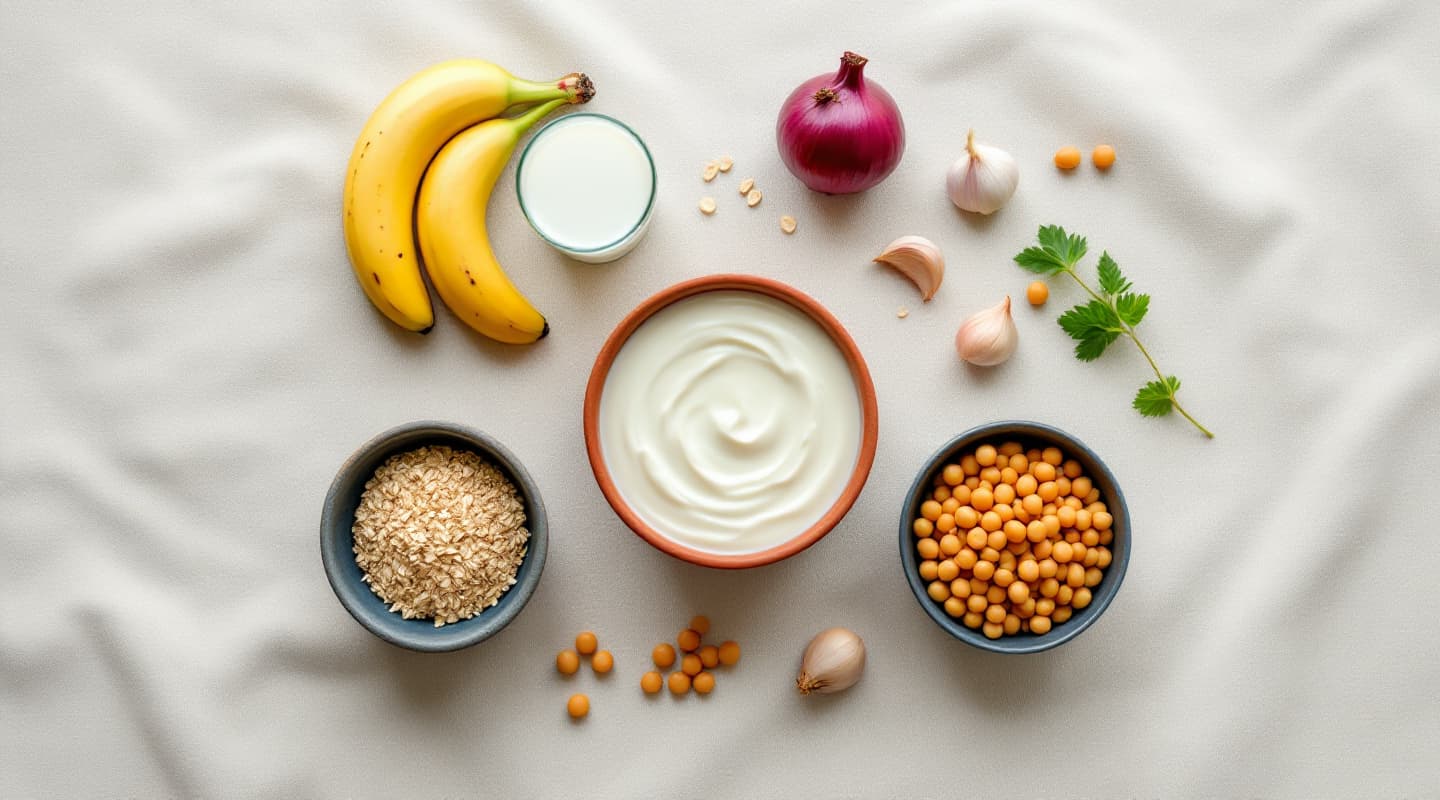
Foods rich in prebiotic fibre:
- Onion and garlic, which carry inulin and FOS
- Slightly green bananas
- Oats and barley
- Chickpeas, rajma and other pulses, which supply GOS
- Whole wheat and other whole grains
Idli and dosa batter is fermented too, but cooking kills the microbes, so the finished dish is not a source of live cultures. And fermented foods, valuable as they are, are not probiotics in the strict sense: their microbes are rarely identified to strain level or tested for a specific benefit. They are still a good everyday habit.
Do you need a probiotic supplement?
Many people get enough from food: a daily bowl of curd, plus plenty of vegetables, pulses and whole grains, covers both sides. A supplement makes sense when your meals are irregular, when you want specific strains at a measured dose, or when your gut has been unsettled - for example during and after a course of antibiotics, which affect helpful bacteria along with harmful ones.
How to choose a probiotic supplement
- Named strains, each with its own count. "Probiotic blend, 10 billion CFU" tells you far less than a list of species with the CFU of each. Benefits are strain-specific, so the names matter.
- A CFU count guaranteed until expiry, not at manufacture. Probiotics lose viability over time; a count measured at the factory says nothing about the day you take it. More on this in how to read a supplement label.
- Strains that survive the journey. Stomach acid kills many bacteria. Spore-forming Bacillus coagulans and the yeast Saccharomyces boulardii are notably hardy, and the capsule's design matters too.
- A prebiotic alongside. A synbiotic gives the strains something to feed on.
- Storage you can manage. Some strains need refrigeration; others are stable at room temperature. Check before you buy, especially for an Indian summer.
- A sensible dose. More CFU is not automatically better. What matters is that each strain is present at a level used in research.
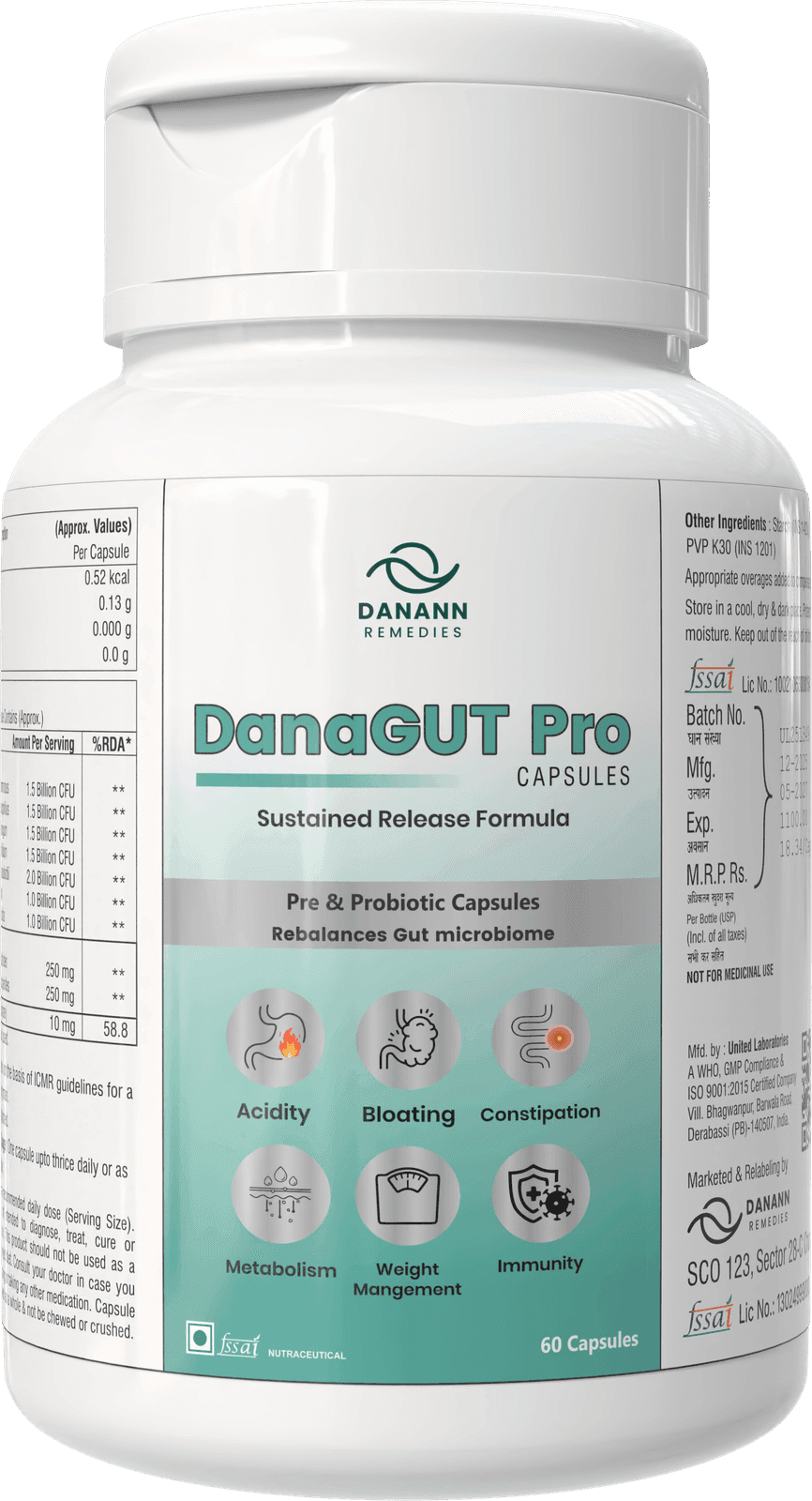
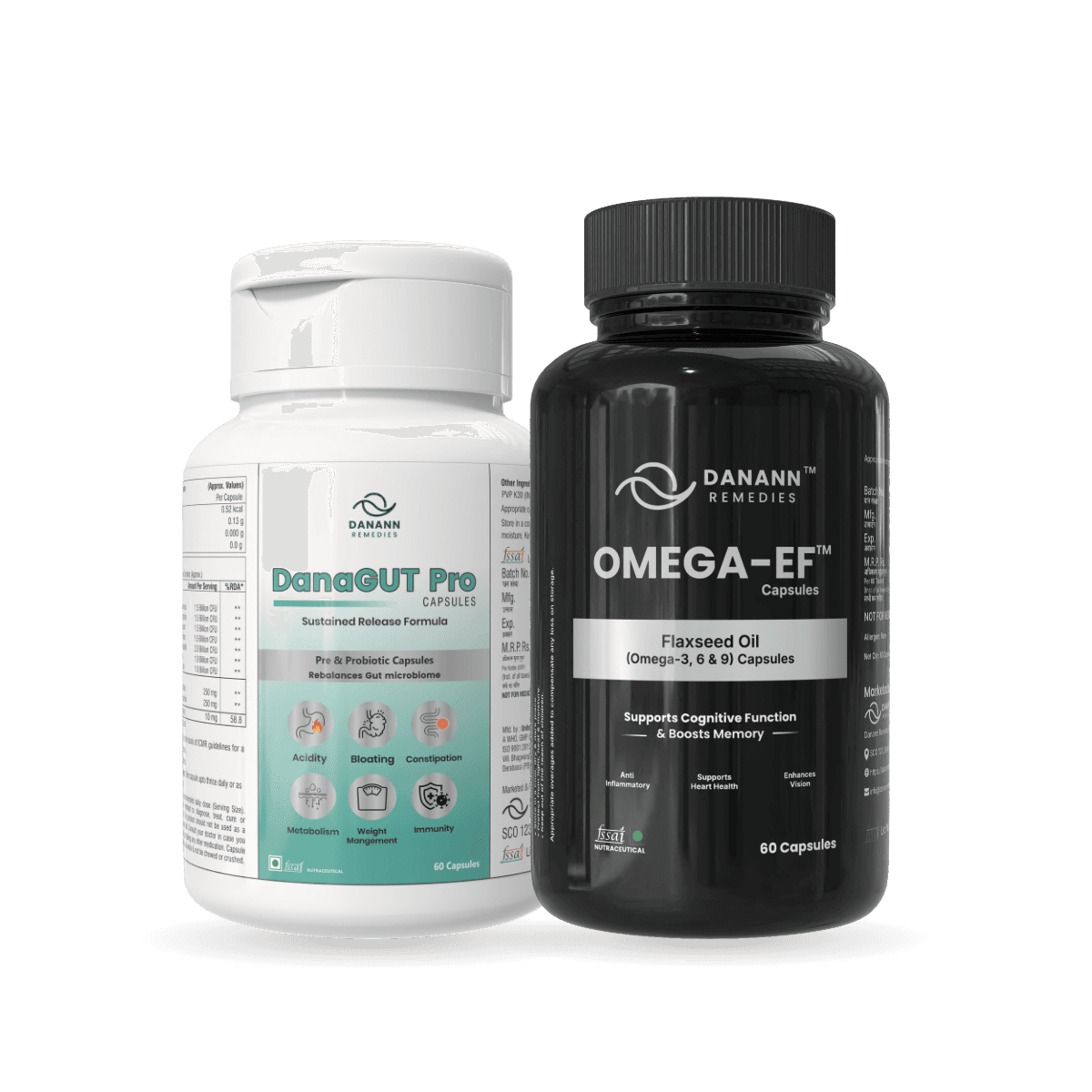
DanaGUT Pro is built to that checklist: seven named strains totalling 10 billion CFU, each counted separately on the label and including Bacillus coagulans and Saccharomyces boulardii; 500 mg of FOS and GOS prebiotic fibre; and 10 mg of zinc, which contributes to the normal function of the immune system - in one sustained-release capsule a day.
How to take a probiotic
- Same time every day, with a meal.
- Give it a few weeks of daily use before you judge it.
- On antibiotics? Leave at least two hours between the antibiotic and a bacterial probiotic. S. boulardii is a yeast, so antibiotics do not affect it.
- Allow for an adjustment. Mild changes in digestion can happen in the first few days as your gut adjusts.
If you are pregnant, breastfeeding, immunocompromised or on regular medication, check with your healthcare professional before starting. Explore our gut health range.
Mentioned in this article
Frequently asked
- What is the difference between probiotics and prebiotics?
- Probiotics are live microorganisms that provide a health benefit when taken in adequate amounts. Prebiotics are substrates - mostly fibres such as FOS and GOS - that the beneficial microbes in your gut selectively feed on. One supplies the microbes; the other supplies their food.
- Is curd a probiotic?
- Curd contains live lactic acid bacteria, so it is a valuable fermented food. Strictly, a probiotic is a specific strain shown to deliver a benefit at a known dose, and the microbes in homemade curd are not identified or counted - but a daily bowl is still a good habit.
- What does CFU mean on a probiotic label?
- Colony-forming units: the number of live microbes able to multiply. Look for the CFU count guaranteed until the expiry date, and for the count of each strain rather than only a blend total.
- Can I take probiotics and prebiotics together?
- Yes. A product that contains both is called a synbiotic, and the pairing is deliberate: the prebiotic fibre gives the probiotic strains something to feed on.
- Can I take a probiotic while on antibiotics?
- Yes, but leave at least two hours between the antibiotic and a bacterial probiotic, so the antibiotic does not act on the bacteria you have just taken. Saccharomyces boulardii is a yeast and is not affected by antibiotics.
- Do probiotics need to be refrigerated?
- It depends on the strains. Many lactobacilli keep best in the cold, while spore-forming Bacillus coagulans and the yeast Saccharomyces boulardii are stable at room temperature. Follow the storage line on the pack.
Sources
- Hill C, et al. (2014). The ISAPP consensus statement on the scope and appropriate use of the term probiotic. Nature Reviews Gastroenterology & Hepatology, 11:506-514
- Gibson GR, et al. (2017). The ISAPP consensus statement on the definition and scope of prebiotics. Nature Reviews Gastroenterology & Hepatology, 14:491-502
- Swanson KS, et al. (2020). The ISAPP consensus statement on the definition and scope of synbiotics. Nature Reviews Gastroenterology & Hepatology, 17:687-701
This article is general information, not medical advice. Talk to a qualified healthcare professional about your own situation.