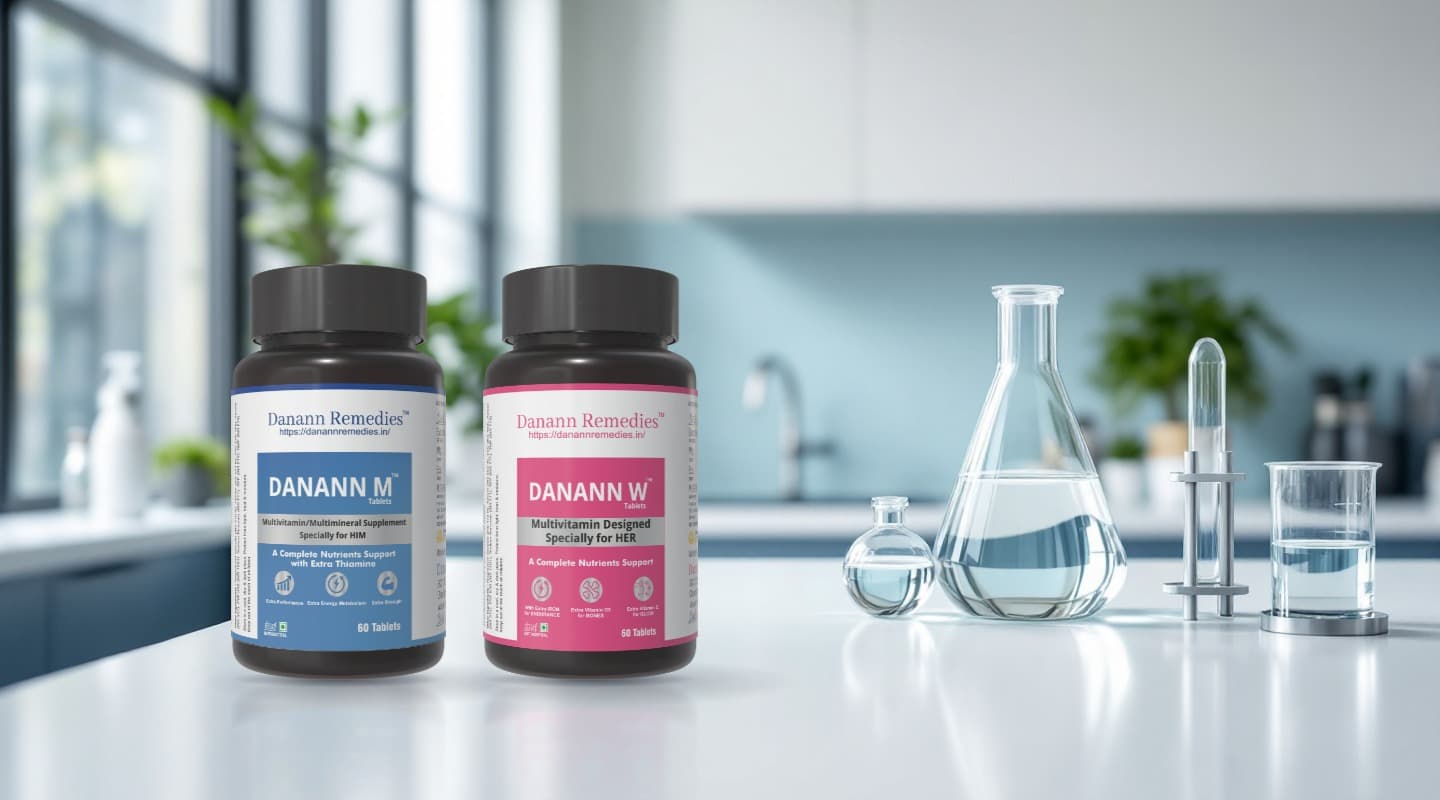
Whey protein isolate vs concentrate: which should you choose?
Danann Remedies Nutrition Team5 min read
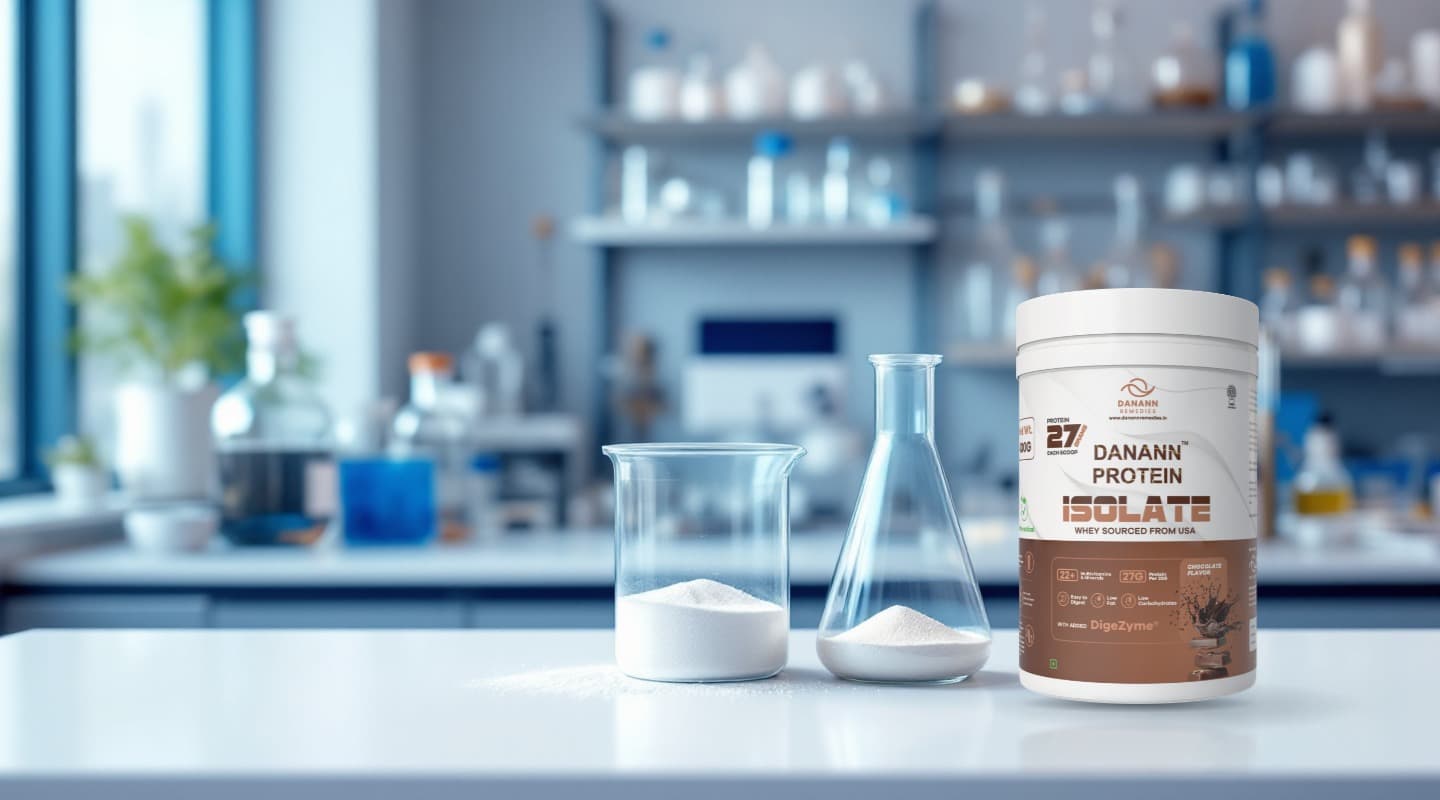
Isolate and concentrate are the same milk protein, filtered to different degrees. Here is what that changes - protein per scoop, lactose, fat and price - and how to pick the one that suits you.
Walk into any supplement aisle and the first decision is not the flavour - it is the word on the front of the tub. Whey protein concentrate, whey protein isolate, sometimes a blend of the two. The price gap can be a third or more, and both sides market hard. The difference itself is simple, and once you know it, the choice usually makes itself.
What whey protein is
Milk protein is roughly four-fifths casein and one-fifth whey. When milk is curdled to make cheese or paneer, the casein sets into curd and the whey stays behind in the liquid, along with lactose, minerals and a little fat.
To turn that liquid into a powder, it is filtered to concentrate the protein and strip out the rest, then dried. How far the filtering goes is the whole difference between concentrate and isolate.
Whey concentrate vs isolate at a glance
| Whey protein concentrate | Whey protein isolate | |
|---|---|---|
| Protein in the raw ingredient | Usually 70-80% | At least 90% |
| Lactose | Some remains | Most is removed |
| Fat | A little | Very little |
| Taste and texture | Creamier, more milky | Lighter, cleaner |
| Cost per gram of protein | Lower | Higher |
| Suits | People who digest milk easily and want value | People who find dairy heavy, or want more protein per scoop |
Those percentages describe the raw ingredient. A flavoured scoop always reads lower, because cocoa, sweetener and anything else added take up part of the weight. That is why the useful number on a tub is not the protein per scoop on its own, but the protein divided by the scoop's weight.
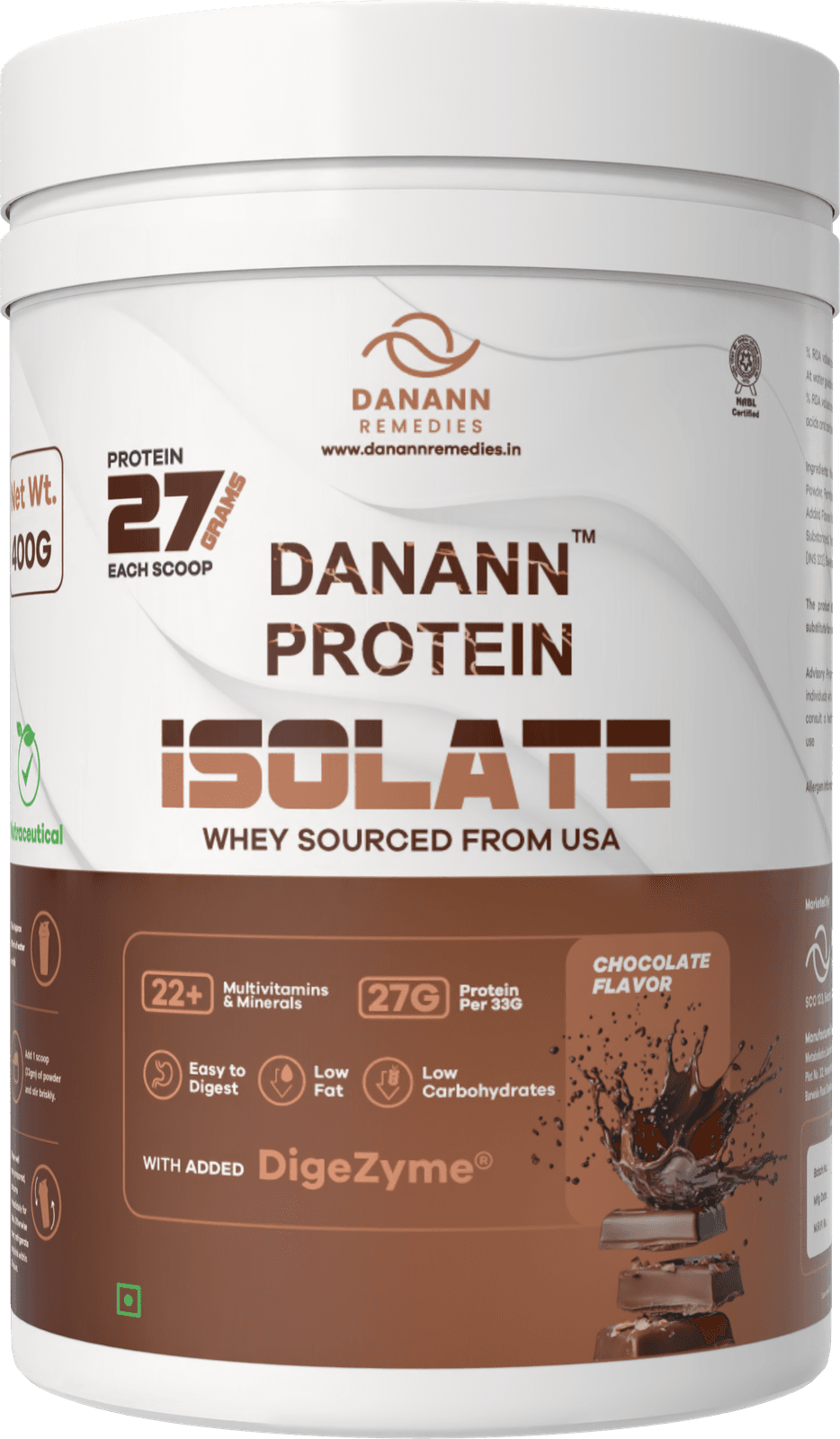
Danann Protein Isolate, for example, carries 27 g of protein in a 33 g scoop - 82% protein by weight as served, flavour included.
Is isolate better for building muscle?
Not in any way that matters for most people. Both are complete proteins: they contain all nine essential amino acids, and whey is one of the richest food sources of leucine, the amino acid most closely tied to switching on muscle protein synthesis. Gram for gram of protein, isolate and concentrate deliver almost the same amino acids.
What builds and maintains muscle is training plus enough total protein across the day. The International Society of Sports Nutrition puts that at 1.4-2.0 g per kilogram of body weight a day for most people who exercise, ideally in servings of about 20-40 g spread every three to four hours.
So the better powder is the one you digest comfortably and actually take every day.
How much protein do you need in a day?
For healthy Indian adults, ICMR-NIN's 2020 recommendations set the RDA at 0.83 g of protein per kilogram of body weight - about 54 g a day for a 65 kg man and 46 g for a 55 kg woman. Where the diet is mostly cereal, with lower-quality protein, the same report suggests 1 g per kilogram.
If you train, aim for the 1.4-2.0 g/kg range above. For a 70 kg person that is roughly 100-140 g a day - more than a typical plate of rice, roti and dal provides without planning.
Whey is a convenient way to close that gap, not a replacement for meals. Dal, paneer, curd, milk, soya, chana and nuts all count towards the same total.
Choose whey isolate if...
- Milk or paneer tends to leave you bloated - isolate's lower lactose often sits better.
- You are watching carbohydrate or fat and want more protein for the same calories.
- You want the most protein per scoop, or you usually mix it with water.
Choose whey concentrate if...
- Dairy agrees with you and price matters most - concentrate is a perfectly good protein.
- You prefer a creamier taste, or you blend it into milk or smoothies anyway.
What to check on the label, whichever you buy
- Protein per scoop against the scoop's weight. Divide one by the other. A big protein number from a big scoop can hide a low percentage.
- A full amino acid profile. Protein is usually measured by nitrogen, and cheap free-form amino acids such as glycine or taurine add nitrogen without adding useful protein. A published amino acid profile is much harder to inflate - more on this in how to read a supplement label.
- Added sugar. Some flavoured powders carry several grams per scoop.
- Blend or not. A "whey blend" is usually mostly concentrate with some isolate added. The label should say which.
- The FSSAI licence number and the manufacturer, printed on the pack.
How to take whey protein
Mix one scoop with water or milk and take it once or twice a day - after training, or with a meal that would otherwise be light on protein. Timing matters far less than the daily total: a shake after a workout is convenient, but it is the day's intake that counts. Water keeps it lighter; a 200 ml glass of milk adds about 6-7 g of protein, and more calories.
If you have a kidney condition or take regular medication, check with your healthcare professional before adding a protein supplement.
The short answer
Isolate and concentrate are the same milk protein, filtered to different degrees. Isolate gives you more protein and less lactose per scoop, for a higher price; concentrate gives you good protein for less money if dairy agrees with you. Either works for muscle - what matters is reaching your daily protein target, every day. Browse our protein range.
Mentioned in this article
Frequently asked
- Is whey protein isolate better than concentrate?
- Not for building muscle - both are complete proteins with almost the same amino acids per gram of protein. Isolate is filtered further, so it has more protein per scoop and less lactose and fat; concentrate costs less. Choose by how well you digest dairy, your goals and your budget.
- Is whey isolate lactose-free?
- Not completely, but most of the lactose is removed during filtration, so many people who find milk heavy are comfortable with it. If you avoid dairy altogether, whey of either kind is not suitable.
- Can beginners take whey protein isolate?
- Yes. There is nothing advanced about isolate - it is simply a purer form of the same protein. Start with one scoop a day and count it towards your daily protein total.
- How many scoops of whey should I take in a day?
- Most people need one or two. Work out your target first - 0.83 g per kg of body weight for healthy adults, 1.4-2.0 g per kg if you train - see how much your meals already provide, and use whey for the gap.
- Should I mix whey protein with water or milk?
- Either works. Water keeps it lighter and lower in calories; a 200 ml glass of milk adds about 6-7 g of protein and a creamier taste. Isolate mixes easily with water.
- When is the best time to take whey protein?
- Whenever it helps you reach your daily total - after training and with a low-protein breakfast are the common choices. Spreading protein across the day matters more than the exact minute you drink it.
Sources
This article is general information, not medical advice. Talk to a qualified healthcare professional about your own situation.